
Watch: How to Paint Aluminum Siding (Video)
Follow along with our step-by-step walkthrough — the exact prep, primer, and paint sequence a professional crew uses on aluminum siding.
Quick Answer: The Best Paint for Aluminum Siding
The best paint for aluminum siding is a 100% acrylic exterior latex paired with a dedicated bonding primer — top choices are premium 100% acrylic exterior paints from major manufacturers (Sherwin-Williams, Benjamin Moore, PPG, or BEHR), paired with a compatible bonding or metal primer on any bare or exposed aluminum. These products perform well because 100% acrylic paint remains flexible as aluminum expands and contracts. However, all chalk and oxidation must first be removed, and any exposed metal should be primed according to the paint manufacturer’s instructions. Even the best aluminum siding paint job typically lasts 4–7 years in moderate climates and 3–5 years in harsh climates before chalking and fade return, which is why many homeowners choose a permanent ceramic coating instead.
For a standard repaint that typically holds 4–7 years in moderate climates (3–5 in harsh), use a 100% acrylic exterior latex from a top-tier manufacturer, paired with a compatible bonding or metal primer on any bare or exposed aluminum:
- A premium 100% acrylic exterior paint — flexible acrylic film that resists chalking on aluminum
- Two full coats applied over a clean, dry, chalk-free surface
- Spot-prime any bare or exposed metal with a compatible bonding or metal primer per the manufacturer’s instructions
- Follow the paint manufacturer’s directions for surface prep, application temperature, and recoat times
For a long-term refinish that reduces the standard repainting cycle of 4–7 years in moderate climates and 3–5 in harsh climates, Home Shield Coating® is a ceramic-loaded coating system engineered specifically for aluminum, wood, stucco, and brick substrates, backed by a 30-year transferable warranty.
Can You Paint Old Chalky Aluminum Siding?
Yes — but chalk is the #1 reason DIY aluminum paint jobs fail. Chalk is the powdery white film left behind as the factory enamel oxidizes. If you roll fresh paint over it, the new coating bonds to the chalk instead of the metal and lifts off within months. To test for chalk, wipe a dark cloth across a dry panel; if it picks up powder, the panel needs a proper pressure wash and hand-scrub with TSP substitute before any paint touches it.
The other common failure point is oxidation pitting — small corrosion spots where the enamel has worn through to bare aluminum. These need spot-priming with an oil-based or DTM acrylic bonding primer (Zinsser Cover Stain is the industry standard) before topcoat, or the paint will fisheye and peel around the pits.
Dealing with heavy chalking or oxidation across the whole home? Our permanent coating for chalky, oxidized aluminum siding eliminates the repaint cycle entirely.
How to Repaint Aluminum Siding: Step-by-Step
If you are tackling this as a DIY project, the order of operations matters more than the brand of paint you choose. Skipping any of these steps is the #1 reason aluminum siding paint jobs fail early. This Old House follows the same general preparation principles in its professional aluminum siding painting guide.
- Clean the siding with a compatible detergent to remove chalk, dirt, mildew, and other contaminants. Pressure wash only when appropriate for the siding’s condition, and follow the siding and equipment manufacturers’ instructions. Avoid denting panels or forcing water behind laps, rinse thoroughly, and allow the siding to dry completely—typically at least a day—before priming or painting.
- Scrub chalky panels by hand with a stiff brush after washing. Rinse until the runoff is clear. Wipe a dark cloth across a dry panel — if it picks up chalk, wash again.
- Spot-prime bare metal with a DTM acrylic bonding primer. Anywhere the original enamel has worn through to silver aluminum needs primer.
- Caulk seams and trim with a paintable acrylic-urethane caulk. Skip silicone — paint will not bond to it.
- Apply two finish coats of 100% acrylic exterior paint with a 1/2″ nap roller or airless sprayer. Backroll sprayed sections to work the paint into the texture.
- Follow the manufacturer’s instructions for drying, recoat times, application temperature, and rain exposure. Recoat times vary by product and weather conditions.
Expect 3–5 days of labor on 1,800 square feet of paintable exterior wall area if you are working alone, and plan to repeat the process in approximately 4–7 years in moderate climates or 3–5 years in harsh climates.

How Much Does It Cost to Paint Aluminum Siding?
Painting aluminum siding costs between $4.50 and $5.50 per square foot when you hire a professional painter, or roughly $1.75–$2.50 per square foot if you DIY. Costs should be calculated using the home’s paintable exterior surface area, not interior floor area. For a typical 1,800 sq ft of exterior wall area on a single-story home, that works out to:
- DIY repaint: $3,150–$4,500 in materials, plus 30–40 hours of your time
- Professional repaint: $8,100–$9,900 every 4–7 years in moderate climates (3–5 years in harsh climates)
- 30-year painting cost (approximately 5 repaint cycles): $40,500–$49,500 nationally; lower in mild climates and higher in high-cost markets
- Home Shield Coating® one-time refinish: $14,400–$25,200, backed by a 30-year transferable warranty
The math is what drives most of our calls. Over multiple repainting cycles, the cumulative cost of traditional painting can approach or exceed the cost of a one-time permanent refinishing system — especially once labor, prep, repairs, and future price increases are factored in.
How Long Does Paint Last on Aluminum Siding?
Even with perfect prep and premium paint, expect 3–5 years in harsh climates like Florida sun or freeze-thaw Wisconsin, Illinois winters before you see chalking, fading, or peeling start. South- and west-facing walls fail first because UV exposure breaks down the acrylic binders.
Compare that to a permanent ceramic refinishing system, which is engineered specifically for aluminum substrates and carries a transferable 30-year warranty. The difference comes down to resin chemistry and film build: standard acrylic paint binders break down under UV, while a permanent coating uses ceramic microspheres and a much thicker film to reflect UV rather than absorb it (see the dry-film-thickness breakdown further down).
Painting Aluminum Siding in Chicago & Wisconsin: Why Paint Lasts 3–5 Years Here
Everything above about paint lifespan gets shorter in the Upper Midwest. In Chicago, Milwaukee, and the rest of northern Illinois and Wisconsin, aluminum siding repaint cycles realistically run 3–5 years — not the 7–10 years you see quoted for milder climates. The reason is freeze-thaw.
Here’s what happens on a Midwest wall:
- Freeze-thaw cycling. Northern Illinois and Wisconsin see dozens of freeze-thaw cycles every winter. Moisture that gets behind a paint film expands as it freezes, pushing the film off the aluminum — that’s the peeling and flaking you see on north- and west-facing walls first.
- Road salt and lake-effect moisture. Homes near Lake Michigan and along salted roads get constant chloride exposure on lower courses, which accelerates chalking and eats at any film that’s already lifting.
- Short painting windows. Exterior paint needs sustained temperatures above 50°F to cure properly. In Chicago and Wisconsin that leaves a short season — and paint applied too late in the fall or too early in spring fails even faster.
This is why the repaint math is so brutal in our home market: a $10,000–$14,000 aluminum siding repaint every 3–5 years adds up to $40,000–$70,000 over 20 years — and you still end up back on a ladder watching it chalk again.
It’s also why so many Chicagoland and Wisconsin homeowners who collect repainting and coating quotes end up calling us instead. The difference between a franchise operation and a 25-year owner-operated company matters most exactly here: a warranty on a coating that outlasts Midwest winters is only worth something if the company behind it is still there in year 20. We’ve been coating homes across Illinois and Wisconsin since 1999, through every freeze-thaw season since — with a 30-year transferable warranty and 15–25+ year real-world results on local aluminum and cedar homes.
Already dealing with chalking? See why aluminum siding chalks and what actually fixes it.
Best Paint Brands for Aluminum Siding (Detailed Comparison)
If you are determined to repaint rather than recoat, the best paints for aluminum siding share three traits: they are 100% acrylic, they are rated for direct-to-metal (DTM) or galvanized substrates, and they are paired with an oil-based or acrylic bonding primer. Standard exterior latex house paint will fail on aluminum within 3–5 years — the same lifespan you should expect from any paint on this substrate.
| Coating Type | Typical Lifespan on Aluminum | Cost per square foot | Best For |
|---|---|---|---|
| Standard exterior latex | 2–4 years | $1.50–$3.50 | Short-term cosmetic fix |
| 100% acrylic + bonding primer | 3–5 years | $3–$6 | DIY repaint with proper prep |
| Elastomeric paint | 4–6 years | $4–$7 | Mild climates, hairline cracks |
| Home Shield Coating® permanent ceramic coating | Up to 30 years (transferable warranty) | Varies by project* | Long-term refinishing backed by a 30-year transferable warranty |
*Home Shield Coating® pricing varies by surface condition, repairs required, access, and project size. Contact us for a free on-site estimate.
Premium 100% acrylic exterior paints from major manufacturers will bond well to properly prepped aluminum, but none of them are engineered specifically for the substrate. They are general-purpose exterior paints with paint-grade adhesion. That is why the industry default is 4–7 years between repaints in moderate climates and 3–5 years in harsh climates, and why our customers across Florida, Illinois, and Wisconsin eventually call us for a permanent refinishing alternative.
Aluminum Siding Painting FAQ
Can you paint aluminum siding yourself?
Yes. A DIY aluminum siding paint job on a 1,800 sq ft single-story home typically takes 3–5 days and $3,150–$4,500 in materials. The critical steps are removing all chalk and contaminants with a compatible cleaner, allowing the siding to dry completely, spot-priming bare metal with a compatible primer, and applying two coats of 100% acrylic exterior paint. If pressure washing is appropriate for the siding’s condition, follow the siding and equipment manufacturers’ instructions and avoid forcing water behind the panels. Expect the finish to last 4–7 years in moderate climates and 3–5 years in harsh climates before you need to repeat.
What paint sticks to aluminum siding?
100% acrylic exterior paint sticks to aluminum siding when the surface is properly prepped and any bare metal is spot-primed with an oil-based or DTM-rated bonding primer. Premium 100% acrylic exterior paints from major manufacturers (Sherwin-Williams, Benjamin Moore, PPG, BEHR) are proven choices when applied over properly prepped aluminum. Skip alkyd/oil-based topcoats — they become brittle on aluminum and crack within 2–3 years.
Will paint stick to aluminum without primer?
Only if the original factory enamel is fully intact, glossy, and non-chalking — which is rare on siding older than 20 years. Anywhere the factory finish has worn through to bare silver aluminum should be spot-primed with a compatible bonding or metal primer. Any chalk or oxidation must be thoroughly removed before primer or paint is applied.
Do you need to prime aluminum siding before painting?
Separate primer is required on bare or exposed aluminum. If the existing factory finish remains sound, firmly bonded, and non-chalking, a compatible self-priming premium acrylic may be used according to the manufacturer’s instructions.
Is it better to spray or roll paint on aluminum siding?
Spraying with an airless sprayer is faster and generally produces a smoother, more uniform finish. Rolling can also work, but improper technique may leave visible roller marks. Use a brush primarily for cutting in around windows, corners, seams, and trim rather than coating full siding runs.
What are common aluminum siding painting mistakes?
The top five DIY failures we see on repaint call-outs: (1) painting over chalk without a proper pressure wash and hand scrub, (2) skipping primer on bare or pitted metal, (3) using an alkyd/oil-based topcoat that goes brittle within two years, (4) painting in direct sun above 85°F, which flash-dries the film before it can level, and (5) recoating too soon after rain when moisture is still trapped under panels. Any one of these will cut lifespan in half.
Is October too late to paint outside?
Not in Florida — October is one of the best months there. In Illinois and Wisconsin, October is the last safe window for most acrylics, which need surface temps of 50°F+ and no rain for 24–48 hours after final coat. Check the paint can label; most premium acrylics like Sherwin-Williams Emerald cure down to 35°F, but you still need a dry stretch. If overnight lows are already dropping into the 30s in your area, wait until spring.
Will Dawn dish soap clean aluminum siding?
Dawn can remove light dirt and surface grime, but it is generally not strong enough to remove heavy chalking or oxidation before painting. For pre-paint prep, use an appropriate pre-paint cleaner or TSP substitute (Savogran, Krud Kutter Pre-Paint Cleaner), allow it to dwell for 5–10 minutes without drying, scrub as necessary, and rinse thoroughly. Dawn is fine for annual maintenance cleaning of an already-painted or coated surface — not for pre-paint prep.
How much does it cost to paint aluminum siding in Florida?
Professional painting in Florida runs $1.50–$4.50 per square foot, so a home with 1,800 square feet of paintable exterior wall area would cost approximately $2,700–$8,100. Florida’s UV and humidity shorten paint life to 3–5 years, meaning most homeowners repaint 5–6 times over a 30-year ownership period. Using Florida’s $2,700–$8,100 per-repaint range, expect a Florida 30-year paint cost of approximately $13,500–$48,600 before inflation. A one-time Home Shield Coating® refinish is $14,400–$25,200 with a 30-year transferable warranty.
Is it better to paint or replace aluminum siding?
Paint or refinish if the aluminum is structurally sound but only cosmetically worn (chalking, fading, or minor pitting). Replace only if panels are dented, torn, or corroded through. A quality repaint or permanent refinish costs 40–70% less than tearing off aluminum and installing new vinyl or LP SmartSide, and it avoids the landfill impact of removing recyclable aluminum.
Why does paint fade so quickly on metal siding?
As noted earlier, UV radiation is the main driver — it breaks down the acrylic binders that hold the pigment to the aluminum surface. South- and west-facing walls fade first because they get the most direct sun exposure. Thermal expansion of the aluminum panels also stresses the paint film between hot afternoons and cool nights, accelerating cracking and chalking. A ceramic coating engineered for aluminum resists both UV breakdown and thermal cycling, which is why it holds up 30+ years where standard paint fails at 4–7.
What is the best paint / primer for chalky aluminum siding?
After removing the chalk with a pressure wash and scrub, prime any bare metal with an oil-based bonding primer (Zinsser Cover Stain, KILZ Original) and topcoat with a 100% acrylic like Sherwin-Williams SuperPaint or Benjamin Moore MoorGard®. Never paint over chalk without removing it first — the new coat will bond to the chalk and lift off within a season.

Refinishing Aluminum Siding: The Permanent Alternative
Refinishing aluminum siding with a permanent coating is the option most homeowners do not know exists when they start searching. Unlike paint, a refinishing system bonds chemically to properly prepped aluminum, stays flexible through 30+ years of thermal expansion, and carries a written warranty that transfers to the next owner of the home.
Traditional acrylic-binder paint breaks down under UV exposure over time. A permanent refinishing coating uses ceramic microspheres and a much thicker film to reflect UV rather than absorb it. That thicker film — about 17× thicker than a single coat of conventional house paint (see the dry-film-thickness breakdown below) — plus the resin chemistry is why a properly applied ceramic coating carries a 30-year warranty while premium paint lasts 4–7 years in moderate climates (3–5 in harsh).
Home Shield Coating® is a permanent, commercial-grade coating system designed to restore and protect aluminum siding for decades. Here’s what our customers get:
- 30-Year Combined Warranty: Protects your investment and ensures long-lasting results.
- 10-Year Labor Guarantee: Covers not just the product, but also the professional application.
- Restores and Protects: Shields against fading, peeling, and chipping while enhancing curb appeal.
- Long-Term Protection: Enjoy a low-maintenance finish backed by a 30-year transferable warranty.
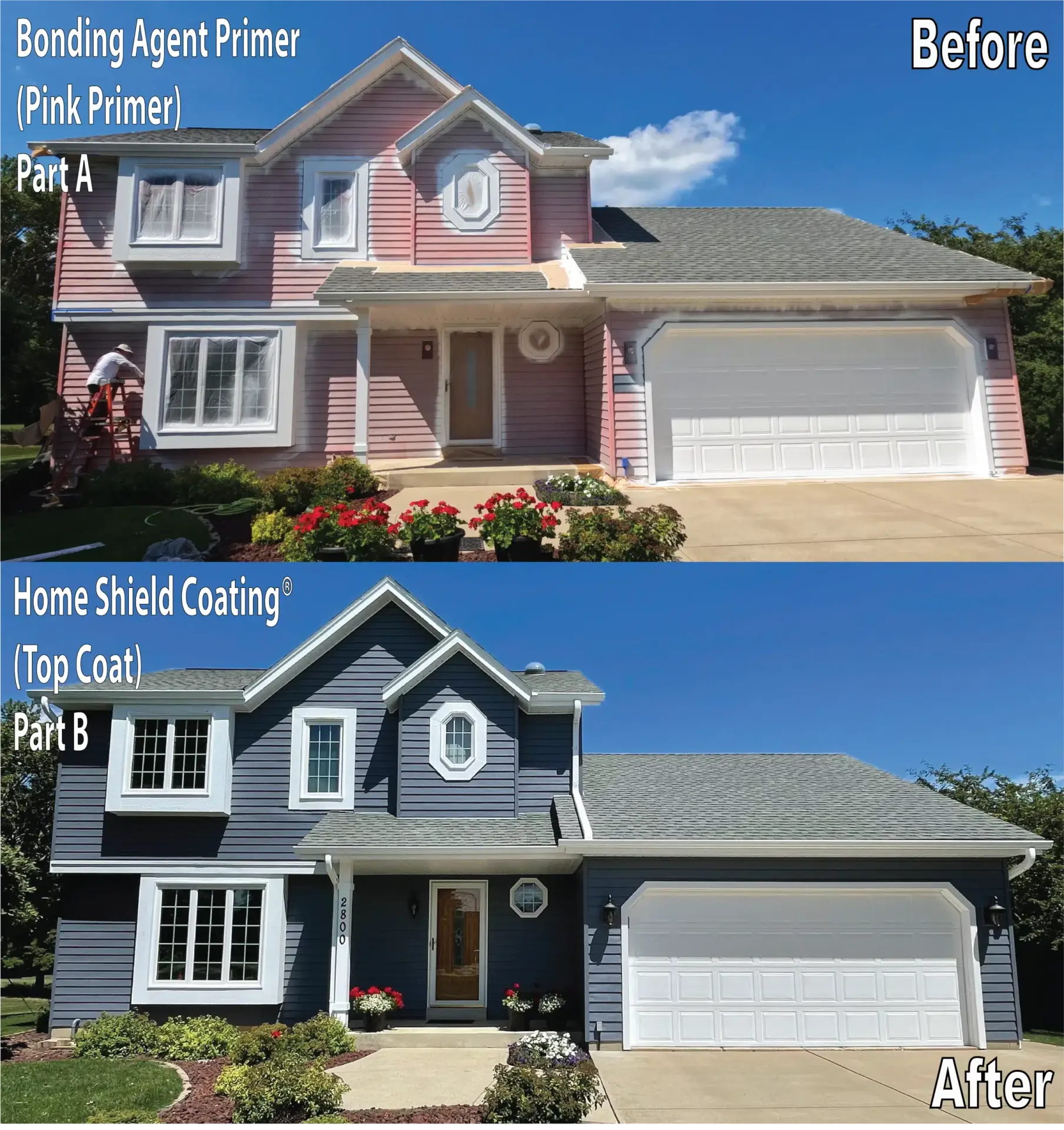
Home Shield Coating® has been refinishing aluminum, wood, stucco, and brick exteriors across Florida, Illinois, and Wisconsin since 1999. Our process includes the same prep steps as a professional paint job — pressure washing, hand scrubbing chalk, spot priming bare metal, caulking seams — followed by a multi-coat application of our ceramic-loaded coating system. The result is a finish about 17× thicker than conventional house paint that we warranty for 30 years against cracking, peeling, chalking, and blistering.
Why 17× thicker? The dry film build.
Home Shield Coating® is built to a 17 dry-mil total dry film thickness (DFT) across a three-coat system:
- Coat 1 — Bonding primer: 5 dry mils
- Coat 2 — Topcoat: 6 dry mils
- Coat 3 — Topcoat: 6 dry mils
Total: 17 dry mils. Conventional exterior house paint dries to roughly 1 dry mil per coat — which is where the 17× multiple comes from.
If you are weighing whether to repaint your aluminum siding again or refinish it once and be done, call us at 800-330-9651 for a free in-person assessment, or read more about our permanent exterior wall coating system and how it compares to traditional exterior paint.