
If you own a home with Dryvit or another EIFS (Exterior Insulation and Finish System) synthetic stucco exterior, you have probably run into two things while researching online: a lot of scary history, and almost no straight answers about what to actually do next.
This guide fixes that. We will be honest about EIFS’s real, documented past — because you deserve accurate information — and then walk you through what it means for your house today, whether you can recoat it, and how a permanent coating differs from a quick coat of paint that cracks again in a few years.
First, What Is Dryvit / EIFS? (And Is It the Same as Stucco?)
Dryvit is the best-known brand name of EIFS — Exterior Insulation and Finish System, often called “synthetic stucco.” It became so dominant that many homeowners call any synthetic stucco “Dryvit,” the way people say “Kleenex” for tissue.
EIFS is not the same as traditional (hard-coat) stucco. Traditional stucco is a cement-based plaster applied over lath. EIFS is a multi-layer system: rigid foam insulation board attached to the wall, covered with a base coat and reinforcing mesh, then finished with a thin synthetic top coat (Dryvit — EIFS vs. Stucco). That foam layer is why EIFS is a strong insulator — but it is also central to the moisture story below.
The Honest History: Why EIFS Got a Bad Reputation
We are not going to pretend this away. EIFS’s reputation problems in the 1990s were real and well-documented.
- In 1995, an American Institute of Architects task force investigation in Wilmington, North Carolina inspected 2,009 homes across 19 builders and 12 EIFS systems. It found 68% had improper or missing sealant joints, and 94% suffered some degree of water intrusion (Penn State Engineering).
- A separate 1996 investigation found 98% of 300 EIFS-sided homes inspected across North Carolina had elevated moisture readings (Virginia Tech archive, 1996).
- The problem drove major litigation, including the “Leaky Condo Crisis” in British Columbia and the “Leaky Homes” crisis in New Zealand (Wikipedia — EIFS).
Here is the critical detail most scary articles leave out: almost all of those failures were “barrier” EIFS — an older, face-sealed design with no way for water to drain back out once it got in (BuildingScience.com).
Barrier EIFS vs. Drainable EIFS — Which Do You Have?
This is the single most important distinction for your house.
- Barrier EIFS (pre-mid-1990s): Face-sealed. Relies entirely on the outer skin and sealant staying perfect forever. Once water gets past a crack or a failed caulk joint, it is trapped against the sheathing — leading to rot and mold (NYC.gov EIFS advisory).
- Drainable EIFS (mid-1990s onward): After code changes driven by the failures above, manufacturers added a drainage plane behind the system so incidental water has a path to escape. This is a fundamentally safer design.
How to get a rough idea which you have: If your home was built or re-clad before roughly 1996, assume it may be barrier EIFS until proven otherwise. The only reliable way to confirm is a professional EIFS moisture inspection — which brings us to the next section.
The Real-World Failure Points (What to Look For)
Whether barrier or drainable, EIFS performance depends on keeping the outer skin intact. The most common trouble spots:
- Sealant / caulk joint failure around windows, doors, and penetrations. UV, thermal cycling, and building movement break sealant down faster than most homeowners expect — and one failed joint can rot a large share of the sheathing behind the wall before anyone notices (Indiana Wall Systems).
- Cracking, especially at corners and around window/door openings. Even hairline cracks are a fresh entry point for water (ProTec Inspection Services).
- Staining or streaking below windows or at joints, which can signal moisture moving through the wall.
Trapped moisture is not just a cosmetic problem. It creates conditions for mold and has been linked to respiratory issues (Indiana Wall Systems), which is why so many homeowners search anxiously for answers.
Can You Paint or Recoat Dryvit / EIFS?
Yes — but not with just any paint, and this is where a lot of homeowners (and even some contractors) make an expensive mistake.
EIFS walls need to breathe. If you apply a standard, non-breathable coating, you can seal the wall’s pores and trap moisture inside, making the exact problem you were trying to fix worse. The right product for EIFS is vapor-permeable (industry guidance generally points to a perm rating of roughly 12 or higher) so the wall can still release incidental moisture (Sto Corp).
A recoat with ordinary exterior paint has two weaknesses on EIFS: it is thin, so it does little to bridge the hairline cracks that are a documented water-entry point; and it still needs redoing on the usual 3–5 year repaint cycle.
How Home Shield Coating Approaches Dryvit / EIFS
This is where a permanent coating is genuinely different from a repaint.
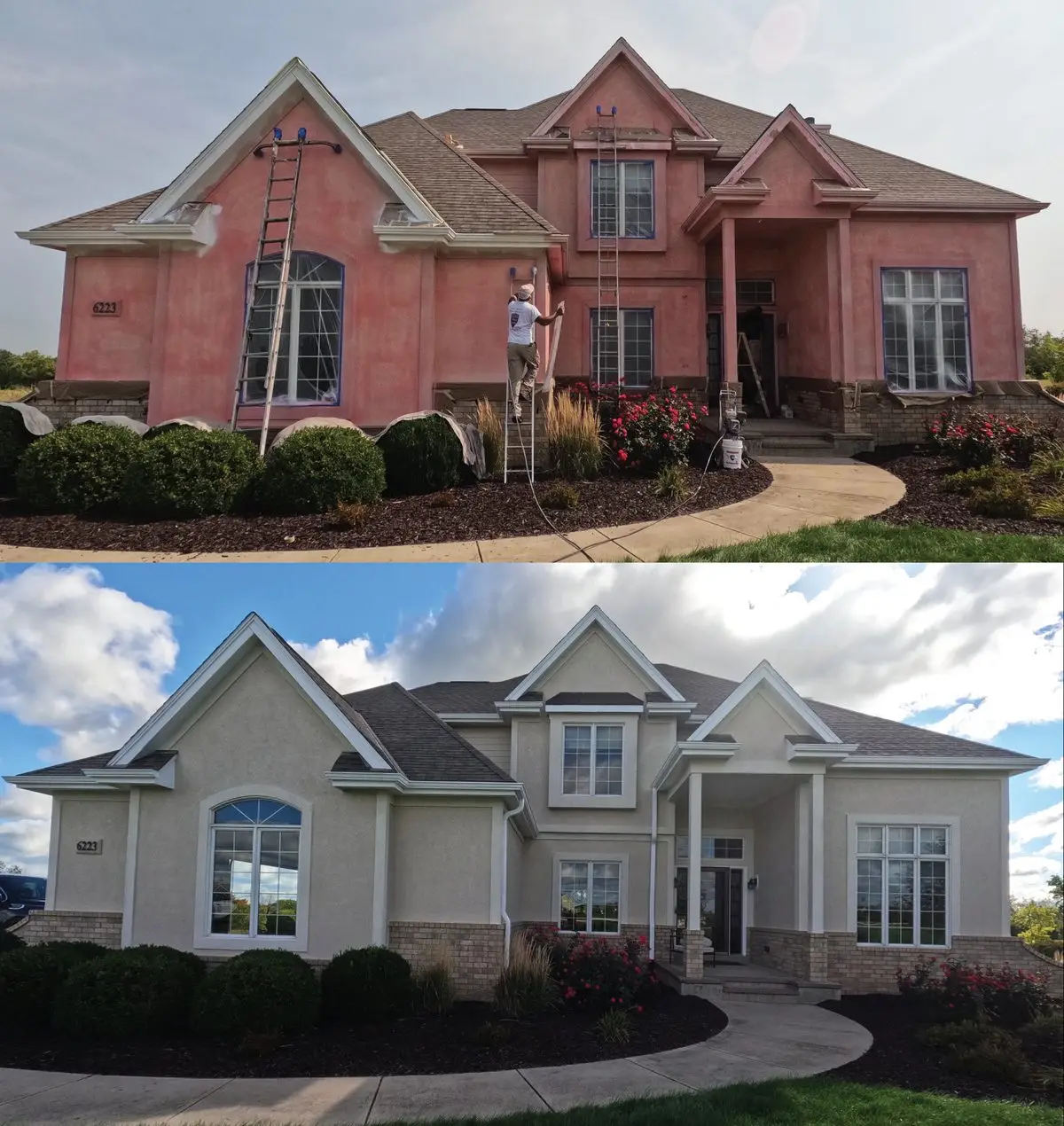
Home Shield Coating’s system is 12 to 17 times thicker than paint. On an EIFS wall, that added thickness and flexibility matters for a specific, mechanical reason: it helps bridge the hairline cracks that ordinary paint simply covers and then re-cracks over. Instead of a thin film that follows every crack in the substrate, you get a substantially thicker, more elastic skin over the exterior.
Combined with proper prep — addressing failed sealant joints and cracks before coating, not painting over them — this restores the intact, sealed exterior that EIFS depends on, rather than just adding another thin layer on top of a system that is already showing wear.
And because it is backed by a 30-year combined warranty (product plus a 10-year labor guarantee), it directly answers the question every EIFS homeowner is really asking: “How do I know this won’t just fail again in five years?”
Important: A coating is not a substitute for fixing active moisture damage. If a professional inspection finds trapped moisture or rotted sheathing behind your EIFS, that has to be repaired first. Coating a wall that is already wet inside seals the problem in. We will always tell you honestly whether your wall is a coating candidate or needs repair work first.
EIFS in Florida vs. Illinois & Wisconsin
Home Shield Coating serves homeowners in Florida, Illinois, and Wisconsin — and EIFS behaves differently in each climate:
- Florida: High humidity and intense UV. UV degrades sealant joints and the finish coat faster, and humidity means any trapped moisture has a harder time drying out. Cracks and joint failures deserve prompt attention here.
- Illinois & Wisconsin: Freeze-thaw cycling is the enemy. Water that enters a hairline crack in fall can freeze, expand, and widen that crack over winter — a self-worsening cycle. A thicker, flexible coating that keeps water out of those cracks in the first place is especially valuable in cold climates.
Frequently Asked Questions
Is Dryvit / EIFS bad?
Older barrier EIFS earned a bad reputation for moisture problems, most of it traced to failed sealant joints and the lack of a drainage path. Modern drainable EIFS is a much safer, better-performing system. The bigger issue for any EIFS is keeping the exterior skin sealed and crack-free over time.
Can you paint over Dryvit?
Yes, but only with a vapor-permeable (breathable) product. A non-breathable coating can trap moisture and make problems worse. Ordinary paint also cracks and needs redoing every few years.
How much does Dryvit / EIFS repair cost?
It depends heavily on whether damage is cosmetic (cracks, sealant) or structural (rotted sheathing from trapped moisture). A moisture inspection is the only way to know. Recoating an intact wall is far less expensive than repairing hidden water damage — which is exactly why catching it early matters.
Should I get an EIFS inspection before buying a home?
Yes. If you are buying a home with synthetic stucco, a professional EIFS moisture inspection is strongly recommended due-diligence before closing.
How often should you recoat EIFS?
A standard paint recoat lasts only a few years. A permanent coating system like Home Shield Coating’s is designed to end that cycle, backed by a 30-year combined warranty.
Next Step
If you have Dryvit or EIFS and you are seeing cracks, staining, or you are just tired of the repaint cycle, the smart first move is an honest assessment — is your wall a coating candidate, or does it need repair first?