

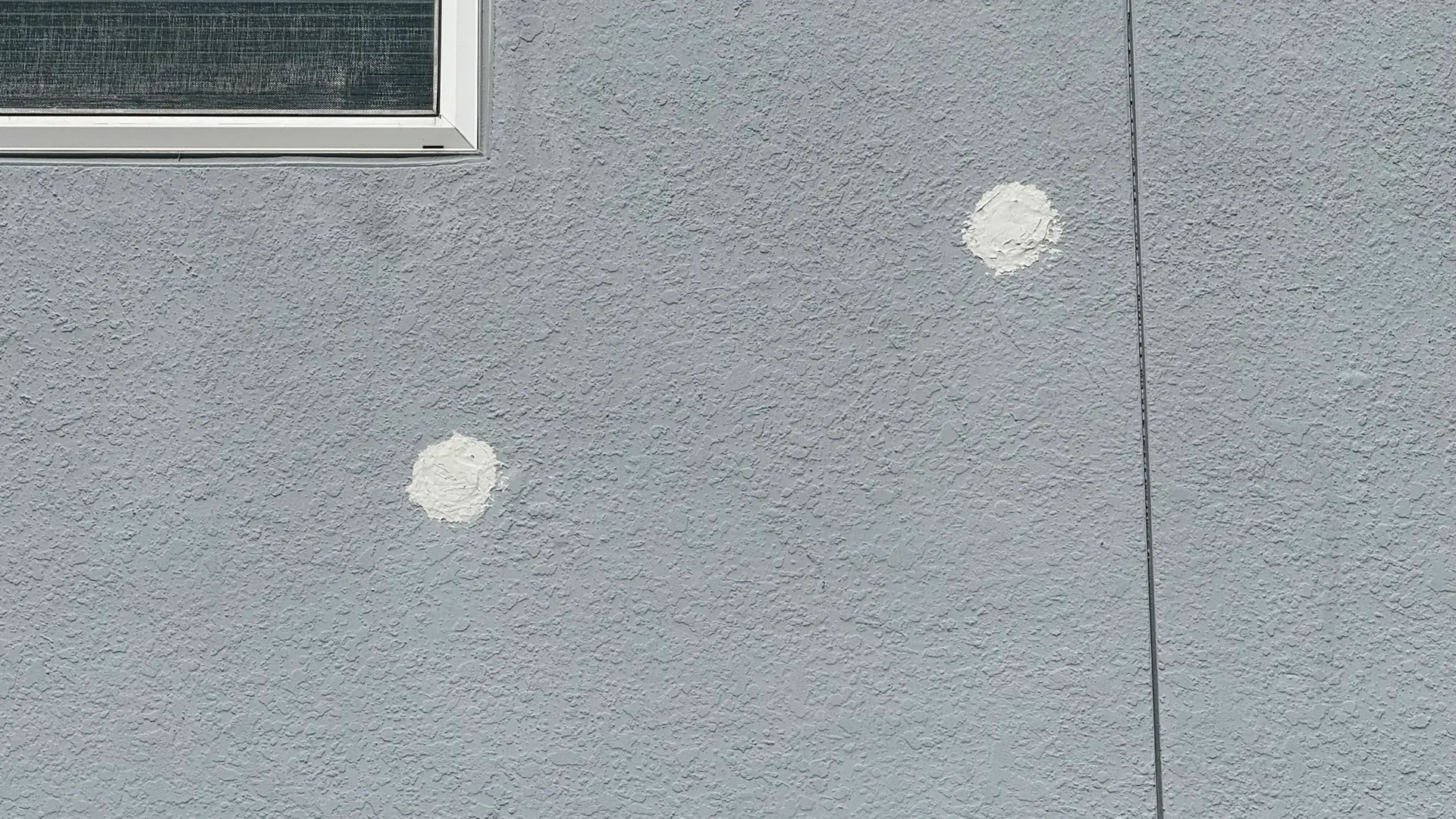
Cracks spreading across your stucco. Water stains bleeding through an interior wall after every hard rain. A musty smell that will not go away. Bright white patches where an inspector drilled into your walls. These are the classic signs of water intrusion in stucco and in Florida they are usually caused by stucco that was installed too thin or improperly, then finished with ordinary paint that could never waterproof it. If any of this sounds familiar, you are not imagining the problem, and you are far from alone.
Thousands of Florida homeowners have been left with cracked, leaking stucco because it was installed too thin or applied improperly by national homebuilders. The problem became so widespread that it resulted in multimillion-dollar settlements and jury verdicts throughout the state. The damage is real, the repairs can be expensive, and far too many homeowners are being told that their legal window has already closed.
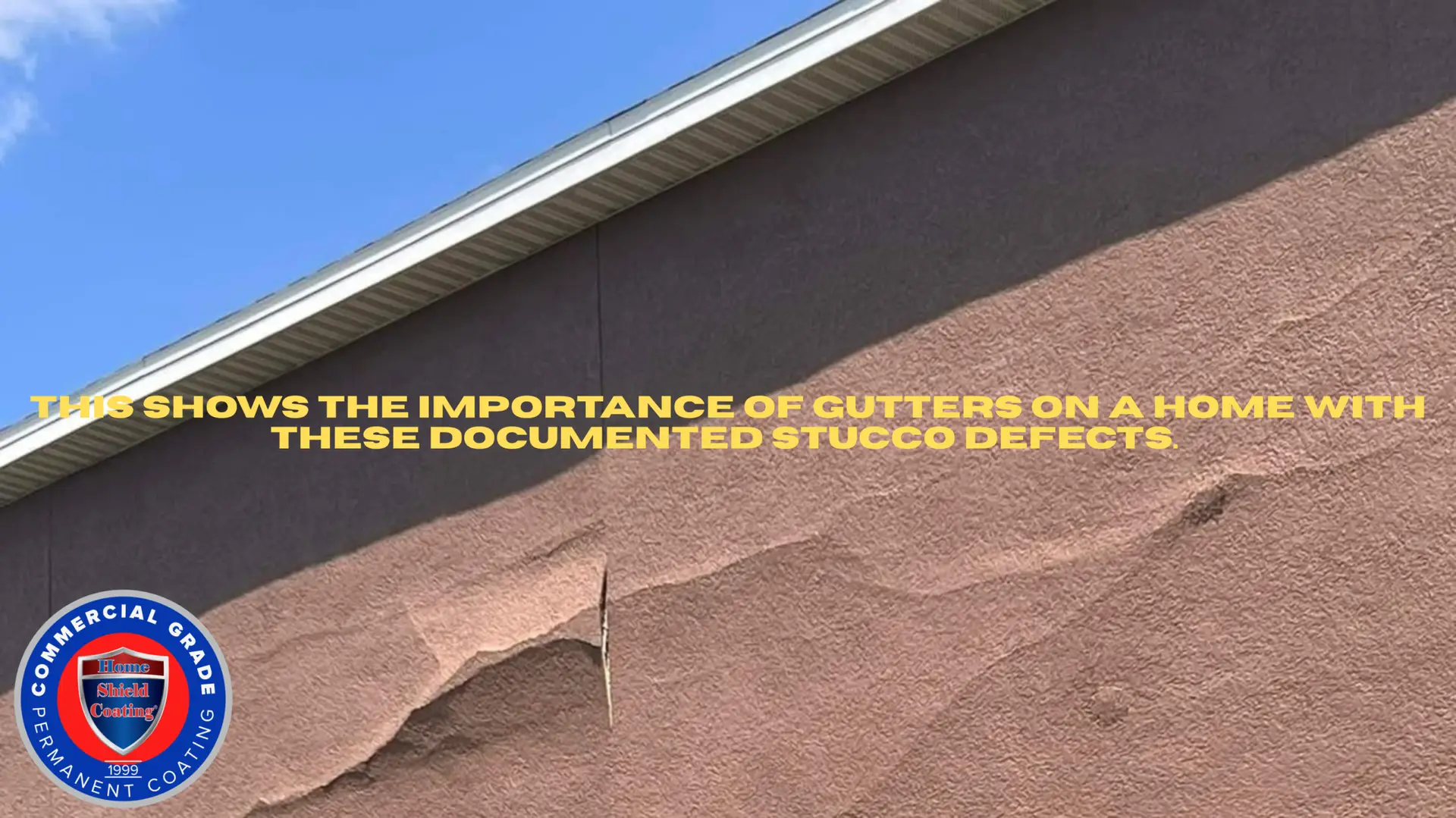
While that is the bad news, here is the good news: Home Shield Coating® has repaired and waterproofed hundreds of Florida homes experiencing these exact issues. We repair the cracks and correct water-management problems around the home. This may include adding, replacing, or repairing gutters to prevent rainwater from repeatedly running down the defective stucco walls.
This is a critical part of the repair process because uncontrolled water is often what caused or accelerated the damage in the first place. After completing the necessary repairs, we seal the exterior walls with our permanent, flexible, rubber-like waterproof coating system. It provides a lasting solution at a fraction of the cost of completely removing and replacing the stucco. This page explains what may be happening to your home, the repair options available to you, and how Home Shield Coating® can help make it right. Request a free inspection, and we will show you exactly what your home needs.
What Causes Water Intrusion in Florida Stucco
Florida’s Building Code sets a minimum stucco thickness depending on what it is applied over. Three-coat stucco over metal lath must be at least 7/8 inch thick; over unit masonry or concrete, at least 5/8 inch (Florida Building Code, 8th Edition (2023), Chapter 25). When builders or their subcontractors cut corners—by using too few coats, applying the stucco too thinly, using incorrect fasteners, or omitting control joints—the wall can fail in a predictable chain.
- Under-thickness or wrong coat count. A Florida newsroom found a KB Home work order calling for a single coat where three were required, with lab testing confirming the coats were improperly applied (WFTV Action 9).
- Cracking. Thin or improperly jointed stucco cracks under Florida’s heat, humidity, and building movement. One Tampa-area engineer explained inspections routinely found stucco below code thickness and control joints installed improperly — issues that ultimately cause the stucco to fail (FOX 13 Tampa Bay).
- Water intrusion. Once cracked, stucco no longer sheds water. Without an intact water-resistive barrier and a working drainage path, water reaches the wood sheathing and framing behind the wall (Florida Lath & Plaster Bureau).
- Hidden rot and mold. Because the damage is behind the wall, it can go unseen for years before it becomes visible.
Stucco application is not a separately licensed trade in Florida, so quality control largely depends on the general contractor’s oversight of subcontractors—one reason investigators have cited for how widespread the problem became.
Named Builders Sued Over Florida Stucco
This is a well-documented, multi-year story covered by news outlets and settled in court and by the Florida Attorney General. Major builders named in stucco litigation include:
| Builder | Case / vehicle | Outcome |
|---|---|---|
| KB Home | Florida AG settlement, 2016 | Settled for $23.5M+; disclosed it had already spent ~$71M repairing 1,688 homes during the investigation (The Real Deal; Jax Daily Record) |
| PulteGroup | Florida AG settlement, 2019 | $78.7M covering 23,000+ homes and condos built 2008–2016 (Legal Newsline; Top Class Actions) |
| D.R. Horton | Heron’s Landing jury verdict, 2016 | $9.6M jury verdict for stucco, roofs, and windows on a 240-unit development — affirmed on appeal (Construction Dive) |
| Toll Brothers | HOA suits, 2016 | Two Orange County communities sued the builder and nine subcontractors over cracking stucco, leaks, and rotted framing (WFTV) |
| Lennar Homes | Arbitration + AG complaints | 50+ families in one Pasco County subdivision pursued claims over under-code stucco (FOX 13) |
| Taylor Morrison | Ongoing, 2023–2025 | 45 active homeowner lawsuits as of October 2025 over allegedly defective stucco installation (Insurance Business Magazine) |
Coverage spanned Central Florida (Orlando/Orange County), Tampa Bay (Pasco/Hillsborough), and Jacksonville across multiple newsrooms — WKMG/ClickOrlando reported 35 lawsuits against KB Home in Orlando alone, and Action News Jax followed the Jacksonville complaints.
Your Legal Window Is Closing Faster Than You Think
Two Florida laws control whether you can still sue:
- Chapter 558 requires you to send the builder written notice and an opportunity to repair before filing suit — at least 60 days prior (120 days for larger HOA claims) (Florida Statutes Ch. 558). A December 2025 appellate ruling reaffirmed that this process is mandatory (Wood Smith Henning & Berman).
- Senate Bill 360 (2023) shortened Florida’s statute of repose from 10 years to 7 years and changed the clock to start from the earliest qualifying date, not the latest (Florida Senate Bill Summary, SB 360). Claims that would have been timely under the old rule had to be filed by July 1, 2024 or they are permanently barred.
The hard reality: many homes built during Florida’s mid-2000s building boom—when defective stucco was especially common—are now beyond the statute-of-repose period and may no longer support a new claim. Many homeowners are discovering damage that is too old to litigate. This is not legal advice; speak with a licensed construction-defect attorney about the dates that apply to your home—but it is why waiting is the enemy.
Construction-defect attorneys throughout Florida continue to investigate claims involving cracked and leaking stucco, and industry writers now call it Florida’s “billion-dollar stucco problem”. Homeowners considering legal action should speak with a licensed Florida attorney promptly, because strict notice and filing deadlines may apply. Remember, too, that whatever the legal outcome, your walls still have to be repaired and waterproofed to stop the damage.
Why a Settlement Rarely Covers a Full Re-Stucco
Full stucco remediation—removing the cladding, repairing rotted sheathing, installing a new water-resistive barrier, and re-stuccoing the home—can cost $25,000 to $50,000 or more, depending on the home’s size and the extent of the damage (Anthony Pennacchi & Sons). In the Concord Station/Lennar case, one homeowner faced $50,000–$70,000 to fully repair (FOX 13).
Settlements, though, are often capped, subject to narrow eligibility requirements, and limited by strict claim deadlines. In some cases, the amount offered may also be based on older repair-cost figures rather than the current cost of fully repairing the home. The KB Home settlement had a narrow eligibility window and a claims deadline that lapsed at the end of 2018, leaving later-discovering homeowners without recourse (Jax Daily Record; Action News Jax). One HOA sued KB Home directly because “loopholes” in the settlement left their homes unrepaired two years later (WFTV).
In short: whether you win, settle, or run out of time, you may still be left with a cracked, leaking wall and a check that will not cover a complete re-stucco. That is the gap we fill.
We’ve Repaired Hundreds of Homes Like Yours
This is not a new problem to us. Home Shield Coating® has repaired hundreds of homes with cracked, defective, and leaking stucco — including homes tied to builder disputes and lawsuit inspections, still marked with the white core-sample patches you see above. We know exactly what these walls need, because we have fixed them again and again. It’s more affordable to repair the property with Home Shield Coating® than re-stucco the whole property which will need a fresh coat of paint regardless.
Here is what we consistently find, and what we do about it:
- Cracks that keep coming back. Ordinary paint and rigid patches crack again within a season because they cannot move with the wall. We repair cracks with flexible, elastomeric materials engineered to flex with Florida’s heat and humidity so they stay sealed.
- Water getting in behind the stucco. The real failure is almost always water management, not just the crack. We correct the drainage details and add or adjust gutters and grading so water is carried away from the wall instead of driven into it.
- Walls that were never truly waterproof. After repairs, we seal the entire wall with a permanent, rubber-like coating that bridges hairline cracks and forms one continuous waterproof shield so the next crack does not become the next leak.
- Ugly, mismatched inspection patches. We blend and finish the core-sample repairs so your wall looks whole again, removing the unsightly, patchy appearance left behind by forensic core sampling.
Homeowners come to us mid-lawsuit, after a settlement, and long after their legal window has closed because at the end of the day, they still need their house to stop leaking. We are the crew that actually gets that done, at a price that makes sense.
Our Home Shield Coating® Application Process
Signs of Water Intrusion in Stucco Walls
Water intrusion often hides behind the surface long before it becomes obvious. On Florida stucco, watch for these warning signs:
- Hairline or spider cracks spreading across the stucco surface.
- Interior water stains or discoloration on drywall after heavy rain.
- A musty, mildew odor near exterior walls — a sign of trapped moisture and mold.
- Efflorescence — chalky white mineral deposits where water has moved through the wall.
- Bubbling or peeling paint, because the film can no longer hold against moisture.
- Soft or spongy drywall and swollen baseboards along the base of exterior walls.
- A hollow sound when you tap the stucco, indicating it has debonded from the wall.
Any of these warning signs may indicate that water is getting behind the stucco and reaching the water-resistive barrier (WRB), sheathing, or framing. A hollow sound, for example, can indicate delamination without necessarily proving that water has reached the framing. The fix is not another coat of paint — it is a complete waterproofing stucco system that repairs the cracks and seals the wall for good.
How to Waterproof Stucco: Our Repair-and-Seal Process
We are waterproofing experts, and we approach these homes as a water-management problem — not just a cosmetic crack. Our process on a stucco-defect home:
Why Paint Alone Will Not Fix This — It Caused It
Here is the part most homeowners miss: paint is what failed in the first place. Builders finished these walls with ordinary exterior paint over stucco that was already too thin or improperly installed. Paint is a thin, rigid film it cannot bridge a moving crack and it cannot waterproof a wall. So the stucco cracked, the paint cracked right along with it, and water walked straight in. Rolling on another coat of paint even “premium” paint just repeats the mistake that created the problem. Within a season or two you are back to cracks and leaks.
Sealing a defective stucco wall for good takes a real waterproofing system, not a paint job. Here is ours:
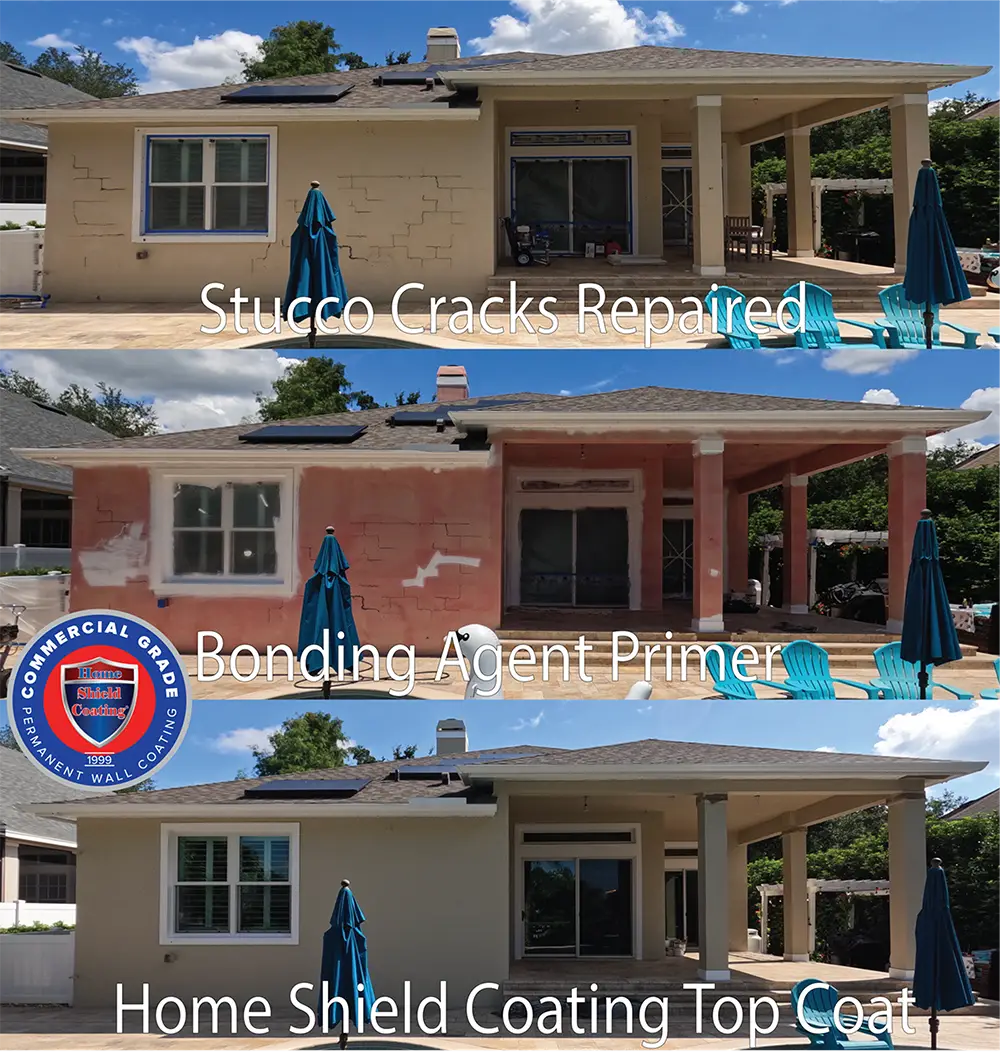
- Repair every crack first. Hairline cracks get flexible, elastomeric filler; larger cracks are cut out, cleaned, bonded, and rebuilt, and failed control joints and weep screeds are corrected because rigid patching and ordinary paint simply crack again as the wall moves (crack-repair best practice).
- Fix the water path. We identify and address accessible water-entry points, correct drainage details, and add or adjust gutters and grading so rainwater is carried away from the wall instead of repeatedly running down it (Florida Lath & Plaster Bureau).
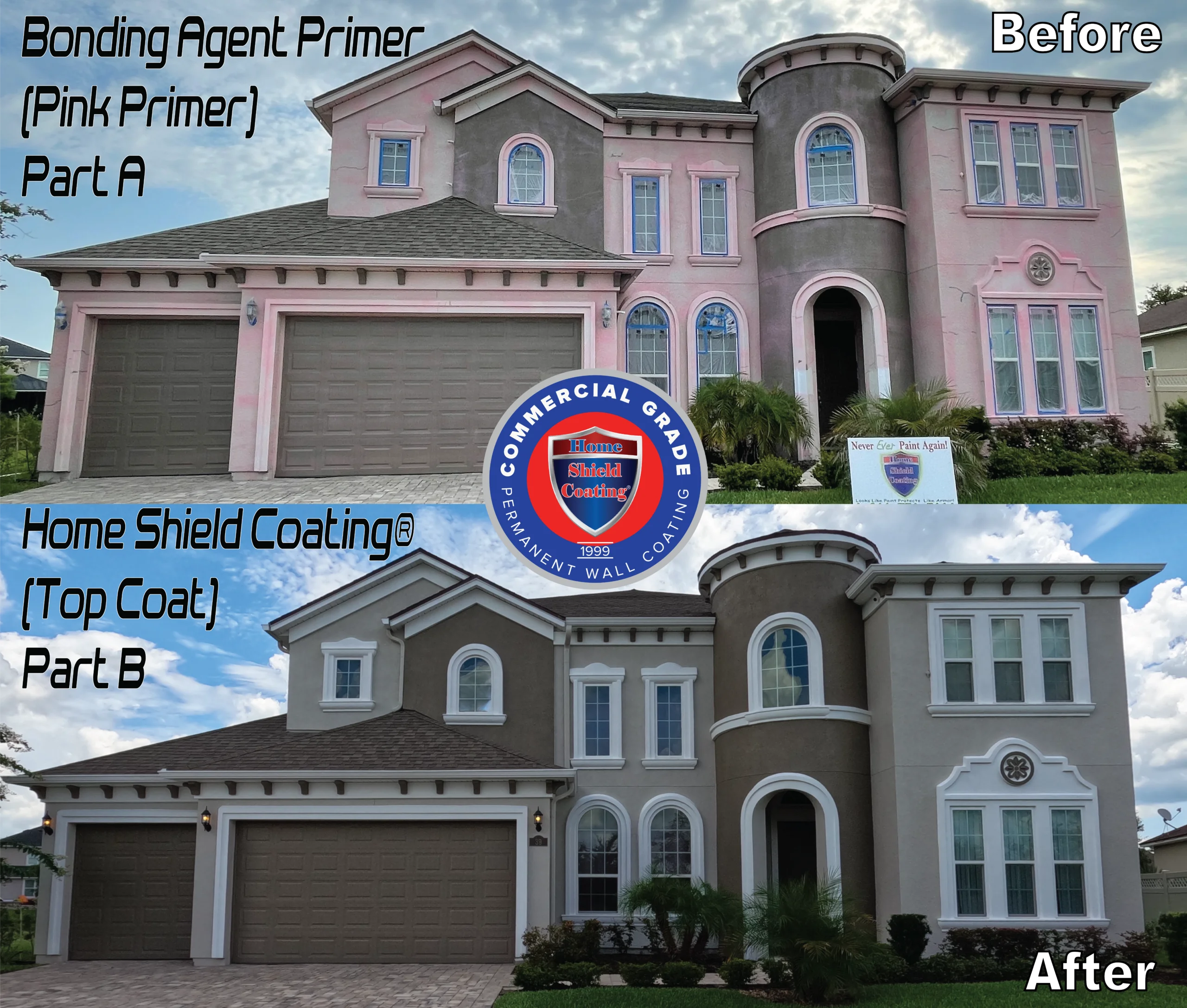
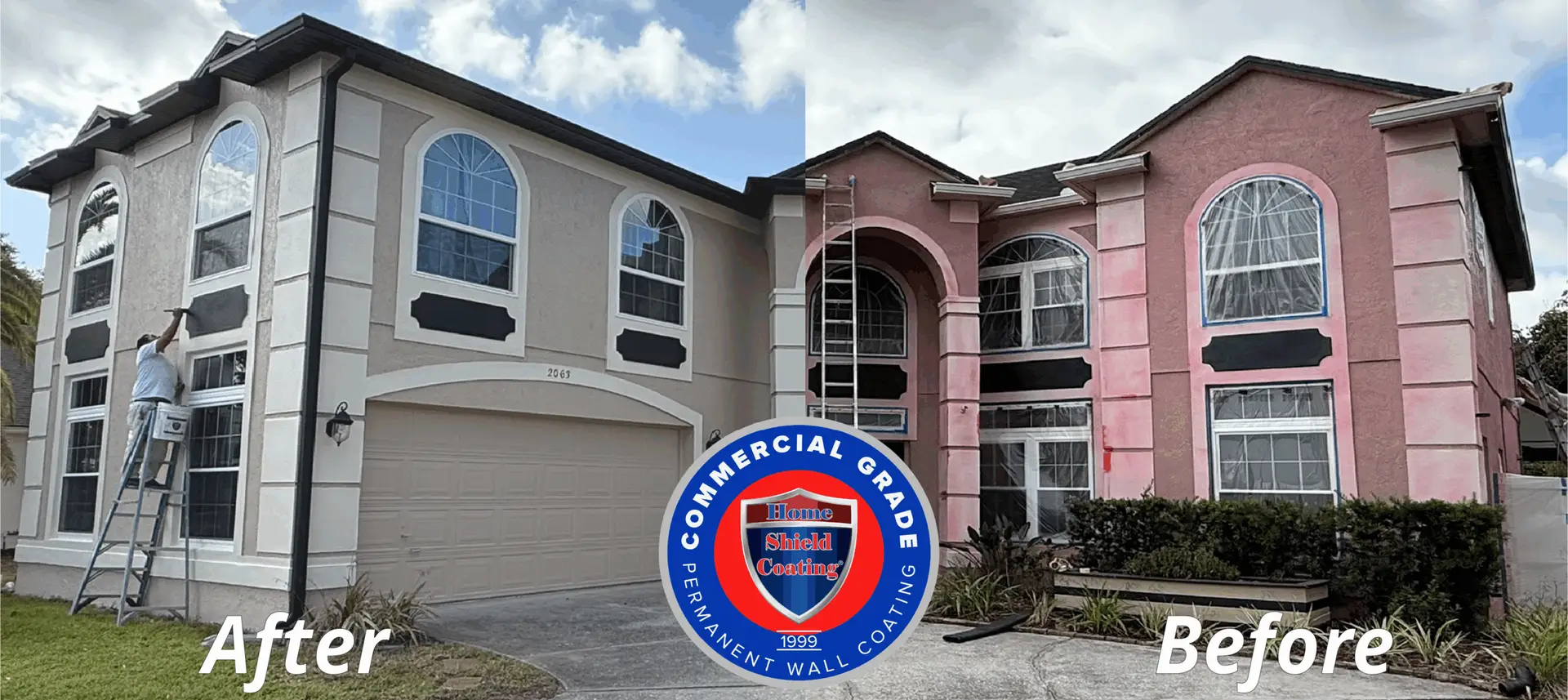
- Apply our pink waterproofing bonding-agent primer. Before any top coat, we prime the entire wall with our signature pink waterproofing bonding-agent primer. It penetrates and grips the repaired stucco, creating a waterproof foundation and a mechanical bond so the top coat locks on and will not peel.
- Apply two full coats of Home Shield Coating® top coat. On top of the primer we apply two coats of our Home Shield Coating top coat a thick, rubber-like elastomeric membrane approximately 17 times thicker than ordinary paint that stretches with thermal movement, bridges hairline cracks, and forms one continuous waterproof shield over the entire wall. Unlike a rigid paint film, the system sheds bulk water while still allowing the wall to breathe, so it stops water intrusion without trapping moisture inside (how elastomeric coatings work).
That is the difference between a paint job that fails again and a permanent waterproofing system: pink bonding primer plus two coats of Home Shield Coating®, over properly repaired stucco. It is what actually seals and waterproofs your exterior — and it is why our fix lasts when the builder’s paint did not.
What sets us apart is that we understand water management, and we back it with a real system instead of a paint can. Because we repair and seal the existing stucco rather than removing and re-stuccoing the entire home, it can provide a far more affordable, permanent solution—the right answer when a lawsuit or settlement does not provide enough money for complete replacement.
Stucco Waterproofing & Water Intrusion FAQ
How do you waterproof stucco in Florida?
Waterproofing stucco is a system, not a paint job. We repair every crack with flexible elastomeric filler, address accessible water-entry points and correct drainage details, prime the wall with a waterproofing bonding-agent primer, then apply two coats of our rubber-like elastomeric coating — approximately 17 times thicker than paint — to seal the entire wall against water intrusion.
What are the signs of water intrusion in stucco?
The most common signs are spreading cracks, interior water stains after rain, a musty odor, efflorescence (white mineral deposits), bubbling or peeling paint, soft drywall along exterior walls, and a hollow sound when you tap the stucco. Any of these means water is getting behind the wall.
Can you waterproof stucco without removing it?
Yes. In many cases we can repair and waterproof the existing stucco in place — sealing the cracks and coating the wall — rather than removing all of it. The appropriate repair depends on whether the underlying sheathing, framing, flashing, and water-resistive barrier have been damaged.
Can I still sue my builder for defective stucco in Florida?
It depends on your dates. Florida’s statute of repose was shortened to 7 years by SB 360 in 2023, and most mid-2000s-boom homes are now past that window (Florida Senate SB 360 summary). You must also follow the Chapter 558 pre-suit notice process (Florida Statutes Ch. 558). Consult a construction-defect attorney about your specific timeline. Either way, your wall still needs to be repaired and waterproofed which is what we do.
Why did an inspector drill holes in my stucco?
Attorneys’ inspectors may take core samples to measure the stucco’s thickness and document its layers as evidence in a construction-defect claim. Those capped holes remain in the wall afterward; we repair and blend them as part of our stucco-repair and waterproofing service.
Is coating cheaper than re-stuccoing my whole house?
Often, when the underlying wall assembly remains structurally sound. Full re-stucco can require removing the cladding, repairing damaged sheathing, restoring the water-resistive barrier, and applying new stucco, so it is a much larger scope than crack repair and coating. If inspection finds hidden structural or water-management damage, full remediation may still be required. Compare itemized proposals based on the actual wall condition.
Will a coating just trap moisture in the wall?
Only if it is applied over an unaddressed moisture path. That is why we repair cracks and correct drainage first, then coat — so the wall is dry and protected, not sealed over a problem (Walls & Ceilings, water management in stucco systems).
Get a Free Stucco Waterproofing Inspection
If your Florida home has cracking stucco, core-sample holes, or a builder dispute that has left your walls unprotected, Home Shield Coating can repair and permanently waterproof them for far less than a full re-stucco. Contact us for a free inspection and we will show you exactly what your home needs. Related reading: Stucco Crack Repair in Florida and The Best Paint to Waterproof Stucco.