
Asbestos Siding: A Comprehensive Guide for Homeowners
In 1888, James Hardie established his company in Australia, transitioning from his family’s tannery business in Scotland. During a trip to London in 1903, he discovered a novel building material called fibrocement and imported it to Australia. Early versions of Hardie Board siding contained asbestos. However, by the mid-1980s, James Hardie pioneered the development of asbestos-free fiber cement products, expanding into a wide range of durable and flexible cement building materials. Leveraging their Australian expertise, James Hardie entered the U.S. market and has become a leading manufacturer of fiber cement building materials.
Asbestos Siding Quick Answer
Can you paint asbestos siding? In many cases, asbestos-cement siding can be painted or professionally coated if it is intact, stable, and handled without sanding, grinding, sawing, or disturbing the material. The safest first step is to identify the siding, check for damage, and get professional guidance before choosing paint, coating, repair, or removal.
Request a Free Asbestos Siding Coating Estimate
What is asbestos paint?
“Asbestos paint” is a common shorthand for exterior paint or coating applied over asbestos siding — a way to encapsulate and protect the material without removing it. The best products for this purpose are 100% acrylic latex exterior paints applied over a bonding primer, or a permanent coating engineered as a full encapsulation system. Home Shield Coating® is a commercial-grade permanent coating that carries a 30-year transferable warranty and a 10-year labor guarantee, applied in a three-coat system that seals the surface.
What is asbestos encapsulation paint?
Asbestos encapsulation paint is a specially formulated coating designed to bond to and fully seal asbestos-containing materials so fibers cannot become airborne. Encapsulants are typically thicker and more flexible than standard exterior paint. Home Shield Coating® is 17× thicker than standard paint and functions as a full-surface encapsulation system on asbestos siding — protecting the material while eliminating the repaint cycle that comes with standard exterior latex.
What is the best paint for asbestos siding?
The best paint for asbestos siding is a 100% acrylic latex exterior applied over a proper bonding primer, using low-pressure cleaning and no sanding or scraping. For maximum protection, a permanent encapsulation coating like Home Shield Coating® — 17× thicker than paint, with a 30-year transferable warranty and 10-year labor guarantee — is engineered to seal asbestos siding rather than sit on top of it as a thin paint film.
Painting Asbestos Siding: Safety First
Asbestos siding should never be sanded, dry scraped aggressively, cut, drilled, ground, or pressure washed in a way that can release dust or fibers. If the siding is cracked, crumbling, loose, or friable, talk with a qualified asbestos professional before any paint or coating work begins. Home Shield Coating® does not provide asbestos abatement; our role is to help homeowners understand whether an intact exterior siding surface may be a candidate for a professional coating system.
When Coating Asbestos Siding May Make Sense
- The siding is intact: Panels are secure, not crumbling, and not shedding material.
- You want to avoid unnecessary disturbance: Encapsulation or coating may reduce the need to remove stable siding.
- You need longer-term protection: A professionally prepared coating system can help seal and protect weathered exterior siding.
- You want a contractor to inspect first: A field review can help separate normal weathering from damage that needs specialist advice.
Helpful Resources for Asbestos Siding Homeowners
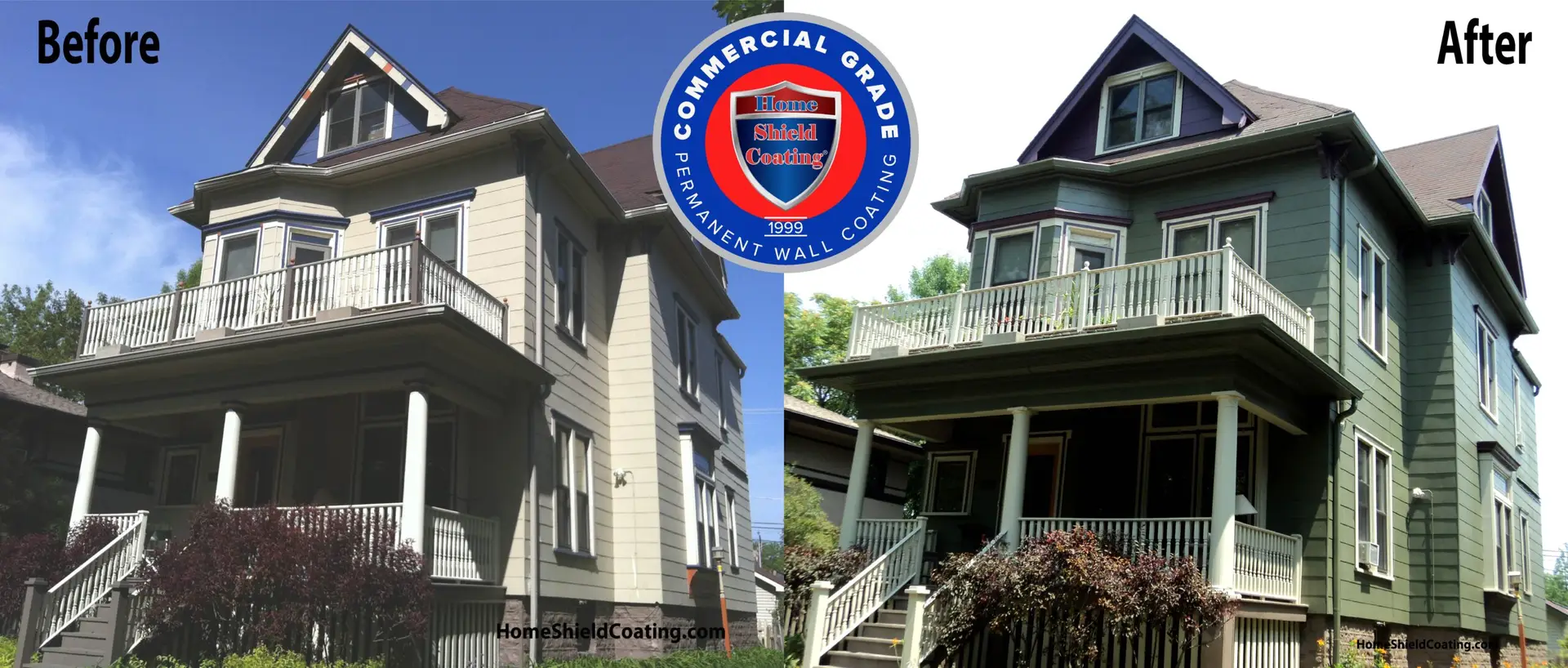
- See project examples in our before and after photo album.
- Compare coating options in our Best Exterior Paints for 2026 guide.
- Learn how long-term coating warranties work in our lifetime paint buyer’s guide.
- If your siding is fiber cement instead of asbestos-cement, read our best paint for Hardie board siding guide.
Asbestos Siding FAQ
Can you paint asbestos siding?
Yes, many asbestos-cement siding surfaces can be painted or coated if they are intact and stable. The key is to avoid disturbing the material and to use safe prep methods, compatible primers, and a coating system designed for the surface condition.
What is the best paint for asbestos siding?
The best paint for asbestos siding is typically a high-quality exterior acrylic or professional coating system that can bond to properly cleaned, stable siding. Product choice matters, but surface condition, safe prep, primer, and application thickness are just as important.
Should asbestos siding be removed before painting?
Not always. If asbestos siding is intact and not creating a hazard, removal may create more disturbance than coating it. Damaged, loose, or friable siding should be reviewed by a qualified asbestos professional before any work starts.
Can you pressure wash asbestos siding?
Do not pressure wash asbestos siding in a way that can damage the panels or release dust and fibers. Cleaning should be gentle, controlled, and appropriate for the condition of the siding.
Identifying Asbestos Siding: What to Look For
Asbestos siding, produced by James Hardie until the mid-1980s, can closely resemble modern Hardie Board siding but is typically thinner. Since proper identification is crucial, here’s what to look for:
- Age of Home: Homes built before 1985 are more likely to have asbestos-containing siding.
- Appearance: Asbestos siding often has a flatter, less textured appearance than modern fiber cement siding. It may also show signs of weathering, such as cracking or chipping.
- Manufacturer’s Markings: Look for any markings or stamps on the siding itself. While this isn’t foolproof, it can sometimes provide clues.
Important Note: The only way to definitively identify asbestos siding is through professional testing.
Asbestos Siding Testing: Ensuring Your Safety
To confirm whether your siding contains asbestos, it’s essential to have a sample tested by a qualified laboratory. This is a relatively inexpensive process, and numerous certified asbestos testing labs can be found online. Don’t attempt to disturb or remove siding yourself before testing, as this can release harmful asbestos fibers. Search terms like “asbestos testing lab near me,” “asbestos testing cost,” or “DIY asbestos test kit” can help you find local options.
The Dangers of Asbestos: Health Risks You Need to Know
Asbestos exposure poses serious health risks, including:
- Mesothelioma: A rare and aggressive cancer affecting the lining of the lungs, abdomen, or heart. Most cases are linked to asbestos exposure.
- Lung Cancer: Asbestos exposure significantly increases the risk of lung cancer, especially when combined with smoking.
- Asbestosis: A chronic lung disease that causes scarring and stiffening of lung tissue, leading to shortness of breath and other respiratory problems.
- Other Cancers: Asbestos exposure has also been linked to other cancers, including laryngeal cancer, ovarian cancer, and colorectal cancer.
It’s crucial to understand that these health risks are primarily associated with the inhalation of asbestos fibers. Undisturbed asbestos siding in good condition poses less of a risk.
Asbestos Regulations: The U.S. Ban and Current Status
While asbestos was widely used in the past, its health hazards led to increasing regulations. The U.S. Environmental Protection Agency (EPA) has banned most uses of asbestos. However, some uses are still permitted. It’s important to be aware of current regulations and consult with qualified professionals regarding asbestos abatement. Search terms like “EPA asbestos regulations” or “asbestos ban” can provide more information.
Asbestos Siding Removal: Hiring a Professional vs. DIY
Removing asbestos siding is a complex and potentially hazardous process. It’s strongly recommended to hire a certified asbestos abatement contractor. These professionals have the training, equipment, and experience to safely remove and dispose of asbestos-containing materials. If you choose the DIY route, you must follow strict safety protocols, including:
- Proper Protective Equipment: Respirators, gloves, and protective clothing are essential to prevent inhaling asbestos fibers.
- Containment: The work area must be properly contained to prevent the spread of asbestos dust.
- Waste Disposal: Asbestos waste must be properly bagged, labeled, and disposed of at a certified landfill.
Google Search terms like “asbestos removal cost,” “asbestos abatement contractors near me,” or “DIY asbestos removal” can provide more details.
Encapsulation: A Safer Alternative to Removal?
If your asbestos siding is in good condition and not damaged, encapsulation may be a viable alternative to removal. This involves sealing the siding with a specialized coating to prevent the release of asbestos fibers.
Painting or Coating Asbestos Siding: Considerations and Best Practices
Yes, asbestos siding can be painted or coated. However, proper surface preparation is crucial. Ensure the siding is clean and free of loose debris. Furthermore, the chosen coating should be durable and designed for exterior use. Home Shield Coating® offers a robust solution, being 17 times thicker than paint and forming a flexible, rubber-like membrane that encapsulates the asbestos and provides long-lasting protection. It’s essential to consult with a qualified professional before undertaking any painting or coating project on asbestos siding. They can assess the condition of the siding and recommend the appropriate course of action. Search terms like “painting asbestos siding” or “coating asbestos siding” can offer additional guidance.
Disclaimer: This blog post provides general information about asbestos siding and should not be considered professional advice. Always consult with qualified professionals for asbestos testing, removal, or encapsulation. Your safety is paramount.
If your home has a mix of siding types or you’re researching coatings for other materials, see our guide to painting aluminum siding—we cover the coating options that hold up on metal cladding and how they compare to the approach used on asbestos and Hardie siding.