
Yes, cement board siding can be painted. The best result starts with a sound, dry surface, gentle cleaning, repairs before coating, and an exterior acrylic system that is compatible with the existing finish. The right approach depends on whether the siding is factory-finished, factory-primed, or previously painted.
This 2027 guide explains how to paint cement board siding without damaging it, when primer is needed, which warning signs should be repaired first, and when a longer-lasting professional coating may be a better fit than another conventional repaint.
Can You Paint Cement Board Siding?
Yes. Cement board siding—more accurately called fiber cement siding—is paintable. James Hardie, the best-known fiber cement manufacturer, states that its pre-primed siding should receive an acrylic topcoat. Its ColorPlus® products arrive with a factory-applied finish and can be repainted later if the homeowner wants a different color.
“Cement board,” “fiber cement,” “Hardie Board,” and “HardiePlank” are often used interchangeably in homeowner searches, but Hardie is a brand. Other fiber cement products may have different installation, repair, primer, paint, and warranty requirements. Confirm the manufacturer and existing finish before work begins.
Identify the Existing Finish Before You Repaint
The existing finish changes the preparation plan:
- Factory-primed siding: The primer is not the final weathering surface. Use a compatible exterior acrylic topcoat and follow the siding and paint manufacturers’ current instructions.
- Factory-finished siding: Products such as James Hardie ColorPlus® arrive with a cured finish. Clean and inspect the surface, confirm coating compatibility, and review any remaining finish-warranty terms before repainting.
- Previously painted siding: Determine whether the existing coating is firmly bonded. Peeling, blistering, chalking, contamination, or incompatible layers must be addressed before another coat is applied.
- Unknown siding or finish: Do not guess. A contractor should identify the material and test adhesion before specifying the coating system.
James Hardie currently lists a 30-year non-prorated warranty for its fiber cement substrate and a separate 15-year limited warranty for ColorPlus® finishes. Those are different coverages. A repaint or coating proposal should never imply that a finish warranty and the siding substrate warranty are the same thing.
When Does Fiber Cement Siding Need Repainting?
There is no reliable universal repaint schedule for every fiber cement home. Exposure, color, previous coating, surface preparation, workmanship, climate, and moisture management all affect the finish. Inspect the siding instead of relying on a fixed number of years.
Common signs that the finish needs professional evaluation include:
- uneven fading or a color change that cleaning does not correct;
- chalking that leaves pigment on a clean cloth or hand;
- peeling, flaking, blistering, or exposed primer;
- failed caulk at locations where the manufacturer calls for sealant;
- open joints, missing joint flashing, or water staining;
- cracked, loose, impact-damaged, or delaminating boards; and
- repeated paint failure that may indicate trapped moisture or another underlying problem.
Paint and coating are finishes, not structural repairs. Damaged boards, improper clearances, leaking flashing, failed penetrations, and active moisture problems should be corrected before refinishing.
How to Paint Cement Board Siding: 7 Essential Steps
1. Inspect the siding and water-management details
Walk every elevation and inspect boards, trim, penetrations, kick-out flashing, roof-to-wall transitions, gutters, clearances, joints, and caulked transitions. Determine whether visible staining is surface dirt or evidence of water entering behind the siding.
2. Repair defects before coating
Replace boards that are cracked, loose, soft, delaminated, or otherwise unsuitable for coating. Correct leaks and flashing problems first. Use repair materials and sealants that are approved for the siding and the specific joint. Do not cover a moisture problem and assume the coating will solve it.
3. Clean gently
Remove dirt, mildew, chalk, and other contaminants without damaging the boards or driving water behind them. James Hardie’s homeowner guidance recommends a garden hose with a soft cloth or soft, nonmetal brush and warns against high-pressure power washing. Mild dish soap and water may be used for common organic contaminants; follow the manufacturer’s instructions for any specialty cleaner.
4. Let the siding dry completely
A clean surface can still be too wet to coat. Allow adequate drying time after washing and repairs, and follow the coating manufacturer’s limits for surface moisture, air temperature, surface temperature, humidity, rain, and dew.
5. Protect adjacent surfaces
Mask windows, doors, roofing, stone, brick, fixtures, landscaping, and other surfaces that are not being coated. Plan safe access for upper stories, gables, and difficult elevations before application starts.
6. Prime where the written system requires it
New factory-primed fiber cement is different from exposed, repaired, or previously painted siding. Primer requirements vary by product and condition. Use the primer specified by the finish manufacturer instead of assuming that every square foot needs the same treatment.
7. Apply a compatible exterior finish
Use an exterior acrylic paint or professional coating system approved for fiber cement and the existing finish. Follow the product’s current technical data sheet for film thickness, application method, coat count, recoat time, and weather window. Inspect the completed work for uniform coverage and correct any thin areas before removing protection.
What Not to Do When Painting Fiber Cement
- Do not use aggressive pressure washing that can damage the finish or force water behind the siding.
- Do not coat over loose paint, mildew, dirt, heavy chalk, or a wet surface.
- Do not caulk every butt joint automatically; joint treatment must follow the siding manufacturer’s installation details.
- Do not paint over cracked or failing boards instead of repairing them.
- Do not rely on a universal repaint interval, spray setting, primer, or coat count for every product and climate.
- Do not assume that a new finish changes or replaces the siding manufacturer’s substrate warranty.
Standard Exterior Paint vs. a Long-Lasting Coating
| Consideration | Conventional exterior acrylic paint | Home Shield Coating® |
|---|---|---|
| Up-front cost | Usually the lower-cost option | Higher initial investment |
| Application | Product-specific primer and finish coats | Professionally applied bonding and coating system |
| Future maintenance | Inspect and repaint as the finish weathers | Designed for a longer maintenance interval |
| Warranty comparison | Varies by paint product and contractor | 30-year combined transferable warranty with a 10-year labor guarantee; review the written terms |
| Best fit | Lower initial budget or homeowners who expect future color changes | Homeowners prioritizing long-term protection and fewer repaint projects |
A fair comparison uses the same measured paintable area and repair scope. Ask each contractor to identify cleaning, repairs, primer, finish coats, access equipment, exclusions, labor coverage, material coverage, and transfer requirements in writing.
For specific product choices, see our best paint for Hardie Board siding guide. For maintenance timing and cost factors, read our Hardie Board repainting guide.
What Home Shield Coating Can—and Cannot—Do
Home Shield Coating® can be applied to eligible, properly prepared fiber cement siding as an alternative to another conventional repaint. The system is professionally installed and backed by a 30-year combined transferable warranty that includes a 10-year labor guarantee.
It does not make damaged siding structurally sound, correct leaking flashing, replace missing joint details, or eliminate the need to repair active water intrusion. Those conditions must be addressed first. Review the written warranty for coverage, maintenance requirements, exclusions, and transfer terms rather than relying on a generalized “lifetime paint” claim.
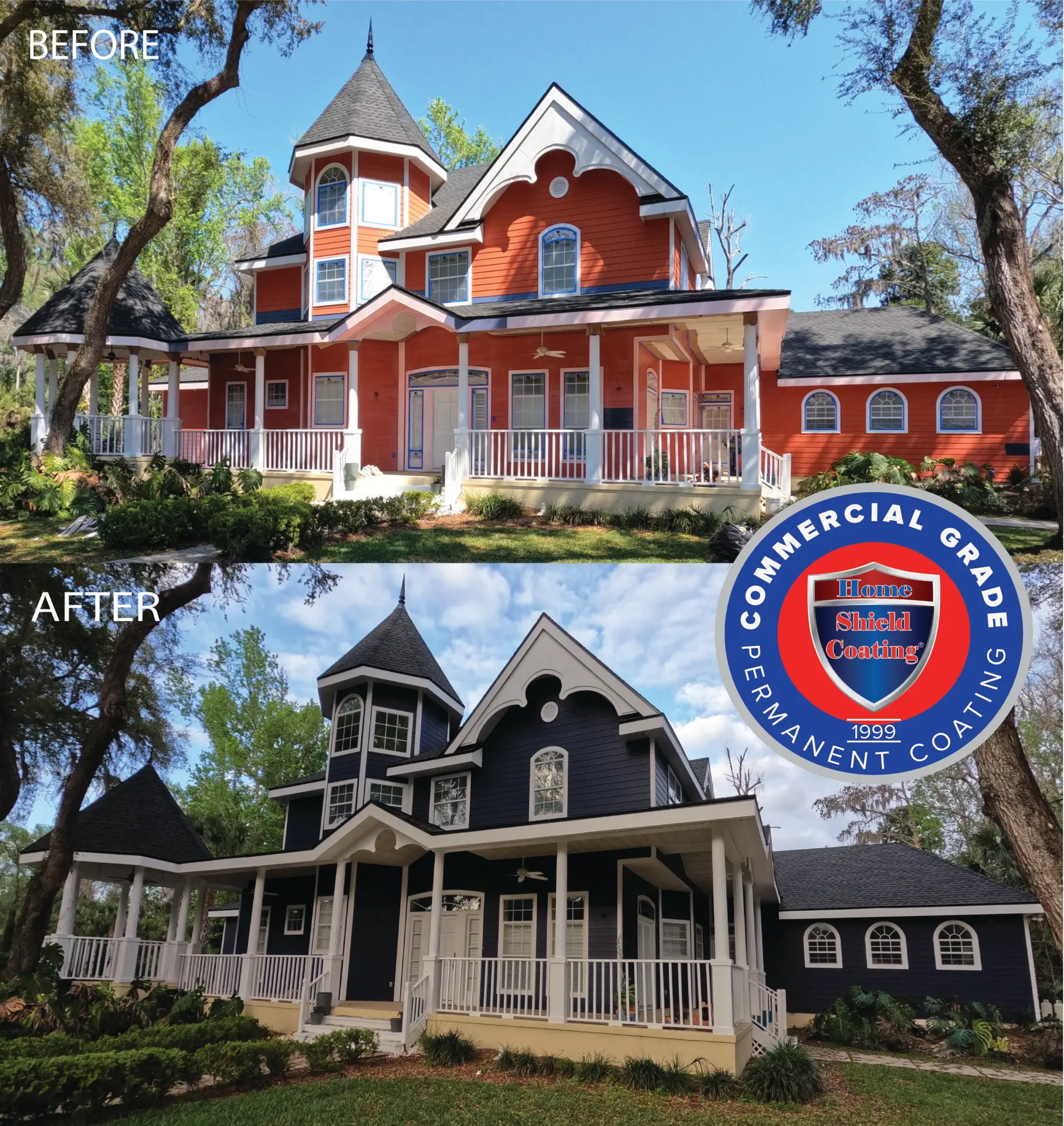
Compare the systems in more detail in our exterior paint vs. permanent coating guide, or view before-and-after exterior projects.
How Much Does It Cost to Paint Cement Board Siding?
Pricing depends on the measured siding area, number of stories, access, repairs, cleaning needs, existing finish, primer requirements, number of colors, labor market, and coating system. A whole-house floor area is not the same as paintable wall area, so generic price-per-square-foot estimates can be misleading.
Request an itemized, site-specific proposal. Home Shield Coating® offers both traditional exterior painting and permanent coating options, allowing homeowners to compare the preparation scope, warranty, and long-term maintenance plan for the same property.
Cement Board Siding Paint FAQ
What is the best paint for cement board siding?
Use a high-quality exterior acrylic topcoat that is compatible with the specific fiber cement product and existing finish. Surface condition, preparation, and correct application matter more than one universal brand recommendation.
Do you have to paint cement board siding?
Factory-primed fiber cement needs an approved finish coat. Factory-finished siding already has its initial color coat. Previously painted siding should be refinished when inspection shows that the coating is no longer providing acceptable coverage or appearance.
Do you need to prime fiber cement before repainting?
Not always. Primer requirements depend on the existing finish, exposed or repaired areas, adhesion, and the selected coating system. Follow the siding and coating manufacturers’ written specifications.
Can you paint over ColorPlus siding?
James Hardie states that ColorPlus® siding can be repainted if the homeowner chooses to change colors after installation. Inspect and clean the surface, confirm coating compatibility, and review the effect on any remaining finish warranty before work begins.
How often should cement board siding be painted?
There is no single interval for every home. Inspect for fading, chalking, exposed primer, peeling, failed sealant where required, and moisture-related defects. Climate, exposure, color, product, preparation, and workmanship all affect timing.
Can paint or coating repair damaged cement board?
No. A coating can protect a sound, properly prepared surface, but cracked, loose, delaminated, or moisture-damaged boards and faulty water-management details must be repaired first.
Get a Fiber Cement Siding Assessment
If your cement board or fiber cement siding is faded, chalking, peeling, or due for a color change, Home Shield Coating® can inspect the surface and explain both traditional paint and long-lasting coating options. We serve homeowners in Florida, Illinois, and Wisconsin.
Schedule a free estimate for a site-specific evaluation and written proposal.
Manufacturer guidance and warranty terms can change. Review the current instructions for your specific siding and coating products. Helpful manufacturer references: James Hardie FAQs and James Hardie siding cleaning guidance.